
The Candle You Burned Last Night Might Be Slowly Poisoning Your Home
Most people never think about what they’re breathing when they light a candle. You close the windows, dim the lights, strike the match — and assume the warm glow filling your living room is nothing but cozy.
It’s not.
A 2009 study from South Carolina State University found that paraffin wax candles — the kind sold in most big-box stores, the kind sitting on your nightstand right now — release toluene and benzene when burned. Both are known carcinogens. Both are petroleum byproducts. Both are invisible, odorless underneath the lavender or vanilla fragrance masking them, and both accumulate in enclosed spaces the way cigarette smoke used to before we knew better.
You read that correctly. The candle you lit to “relax” may be doing the opposite to your lungs.
This is not alarmism. This is chemistry.
Here is what is actually happening inside a cheap candle.
Paraffin wax is a petroleum waste product — a sludge byproduct of refining crude oil into gasoline. Candle manufacturers buy it because it’s dirt cheap, holds fragrance well, and produces a glossy, photogenic surface that looks expensive on a shelf. What it also produces, when you light it, is a cocktail of volatile organic compounds (VOCs) that the EPA classifies alongside diesel exhaust.
The synthetic fragrances added to most mass-market candles compound the problem. The word “fragrance” on a label is a legal loophole — it can contain any combination of over 3,000 chemical ingredients, none of which the manufacturer is required to disclose. Phthalates (hormone disruptors), formaldehyde (a known carcinogen), and styrene (a neurotoxin) are all common components hidden behind that single word.
Then there is the wick. Many imported candles still use lead-core wicks, which were partially banned in the U.S. in 2003 but continue to appear in unregulated imports. Even “zinc-core” wicks, marketed as lead-free alternatives, release trace metals when burned.
Add it up: petroleum wax + synthetic fragrance + metal-core wick + a closed room + two hours of burn time = an indoor air quality problem nobody talks about.
The headache you blamed on stress might be your candle.
If you have ever experienced any of the following after burning a scented candle, the candle itself may be the cause:
- Headaches or migraines that appear 30-60 minutes into a burn
- Sinus congestion or a “stuffy” feeling that wasn’t there before you lit the candle
- Eye irritation or watering
- A sore throat the morning after an evening candle session
- Sneezing or allergy symptoms that worsen indoors
- A faint chemical or “sweet plastic” smell underneath the marketed fragrance
- Black soot accumulating on walls, ceilings, or the inside of the candle jar
These are not signs of a candle allergy. These are signs of low-grade chemical exposure. And for people with asthma, COPD, or chemical sensitivities, the effects compound significantly.
Dr. Amid Hamidi, who led the South Carolina State University study, recommended that people who burn candles regularly in unventilated rooms treat the habit with the same caution they would treat secondhand smoke exposure. That recommendation was published over fifteen years ago. The candle industry has done remarkably little to address it.
So should you stop burning candles entirely?
No. But you should stop burning those candles.
The problem is not candles. The problem is what most candles are made of. The distinction matters because a well-made candle — one built with the right wax, the right fragrance source, and the right wick — is not only safe but genuinely beneficial for your indoor environment and your nervous system.
Here is what to look for:
Wax type matters more than anything else on the label. Soy wax, coconut wax, and beeswax burn clean, produce minimal soot, and release no petroleum-based toxins. Soy and coconut blends in particular burn at a lower temperature, which means slower, longer burns and better fragrance release without overheating the oils. If the label does not explicitly state the wax type, assume paraffin. Brands that use natural wax are proud of it — they will tell you.
The fragrance source determines what you are breathing. Essential oils and phthalate-free fragrance oils are the standard you want. “Phthalate-free” should be stated explicitly. If it is not, it probably is not. Essential oils provide therapeutic benefits beyond scent — lavender genuinely calms the nervous system, eucalyptus opens airways, rosemary sharpens focus. These are not marketing claims. They are measurable physiological responses documented in peer-reviewed research.
The wick determines the burn quality. Cotton wicks are the baseline for safety. Wooden wicks are the upgrade — they burn cleaner, create a wider and more even melt pool (which eliminates tunneling and maximizes scent throw), and produce a soft crackling sound that has measurable calming effects on heart rate variability. Avoid any candle that does not disclose wick material.
The jar and pour method indicate care. Hand-poured candles in small batches allow for quality control that factory production cannot match. Reusable glass vessels signal that the maker thought beyond the burn — they considered the afterlife of the product.
A checklist for your next candle purchase.
Before you buy another candle — from anywhere — ask these five questions:
- Is the wax type stated on the label or product page? If not, move on.
- Does the product specify phthalate-free fragrance or essential oil ingredients? “Fragrance” alone is not enough.
- Is the wick material disclosed? Cotton or wood are the only acceptable answers.
- Is it hand-poured or factory-produced? This is not snobbery — it is quality control.
- Does the brand seem to care about what happens after the candle is finished? Refillable vessels, recycling programs, or reusable containers indicate a maker who thinks beyond the sale.
If a candle cannot answer all five, it does not deserve your money or your lungs.
What we chose to do differently.
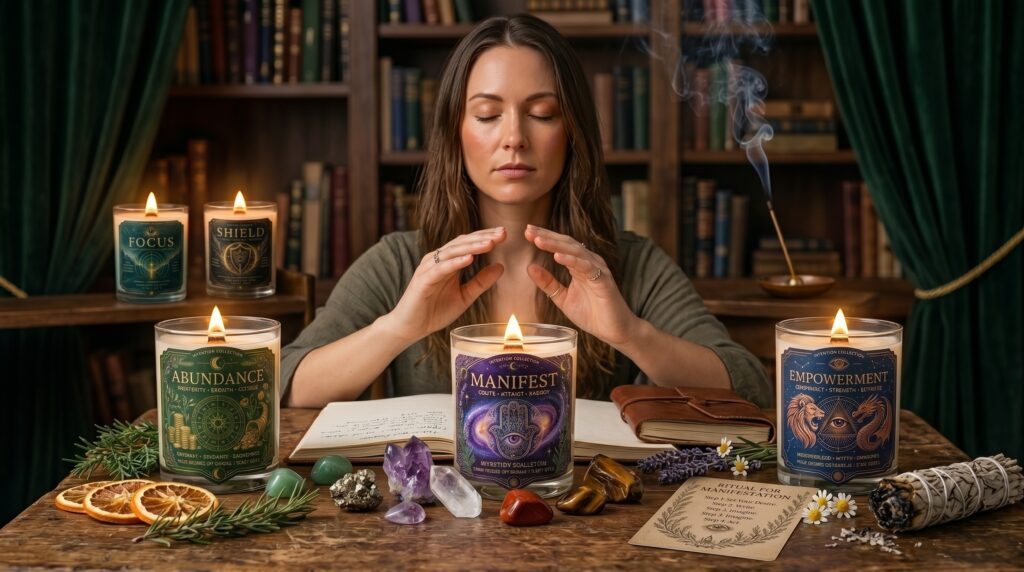
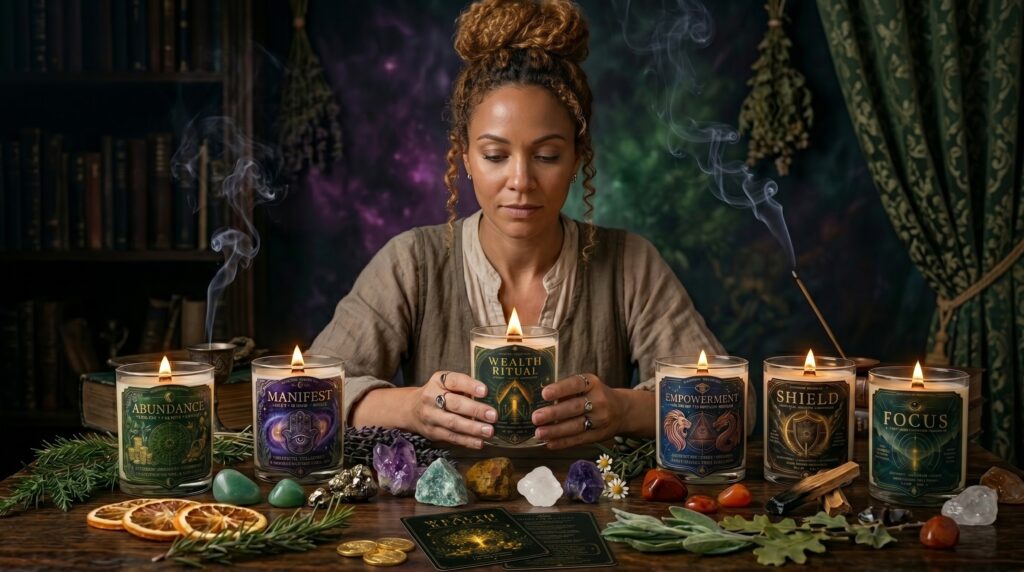
When we built WaxedWords, the first decision was the easiest: no paraffin, no synthetic fragrance, no metal wicks, no shortcuts. Every candle is hand-poured in Columbus, Ohio using natural wax blends, essential oils and phthalate-free fragrance, and wooden wicks that burn clean and slow.
It costs more to make candles this way. Significantly more. Which is why most brands do not do it. But we are not building a brand that races to the lowest price point. We are building one you can burn in a closed bedroom with your child sleeping next to you and never think twice.
That is the standard. Everything else is marketing.
If you have been burning candles for years and never considered what was in them, you are not alone — and this is not your fault. The candle industry has done an extraordinary job of selling ambiance while burying ingredient transparency. Now you know. And now you can choose differently.
Browse the full WaxedWords collection at waxedwords.com — every candle lists its full ingredient profile, wax type, wick material, and fragrance source. Because you should never have to guess what you are breathing.